Duration
December - January 2025
Role
UX Researcher I UX/UI Designer
ScienceSphere — Where Curiosity Meets Discovery
Mobile app that gathers popular science articles from various fields, organizing them into easy-to-navigate categories.
PROJECT OVERVIEW
STRUCTURING SCIENCE CONTENT
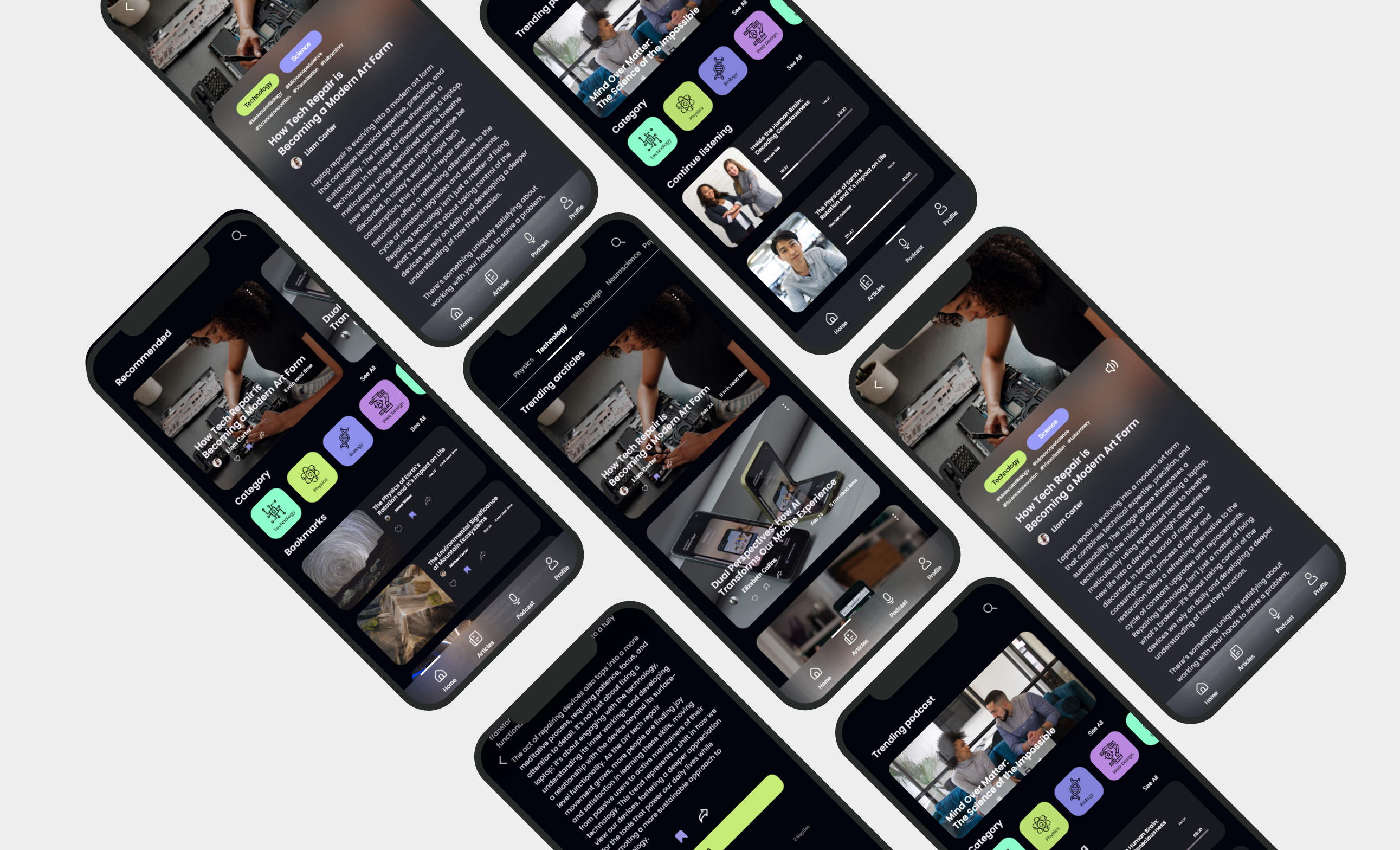
ScienceSphere is a mobile app that gathers popular science articles from various fields, organizing them into easy-to-navigate categories. With a clean and engaging design, it offers personalized features that enhance the reading experience and make exploring science more immersive than ever.
PROJECT TYPE
Article app
AUTHORS
I was responsible for all the phases of this project
TOOLS
Adobe XD
Figma
Adobe Photoshop
Adobe Illustrator
BACKGROUND & PROBLEM
THE KNOWLEDGE GAP IN A RAPID WORLD
ScienceSphere is a mobile app that gathers popular science articles from various fields, organizing them into easy-to-navigate categories. With a clean and engaging design, it offers personalized features that enhance the reading experience and make exploring science more immersive than ever.
ACCESSIBILITY AND ENGAGEMENT
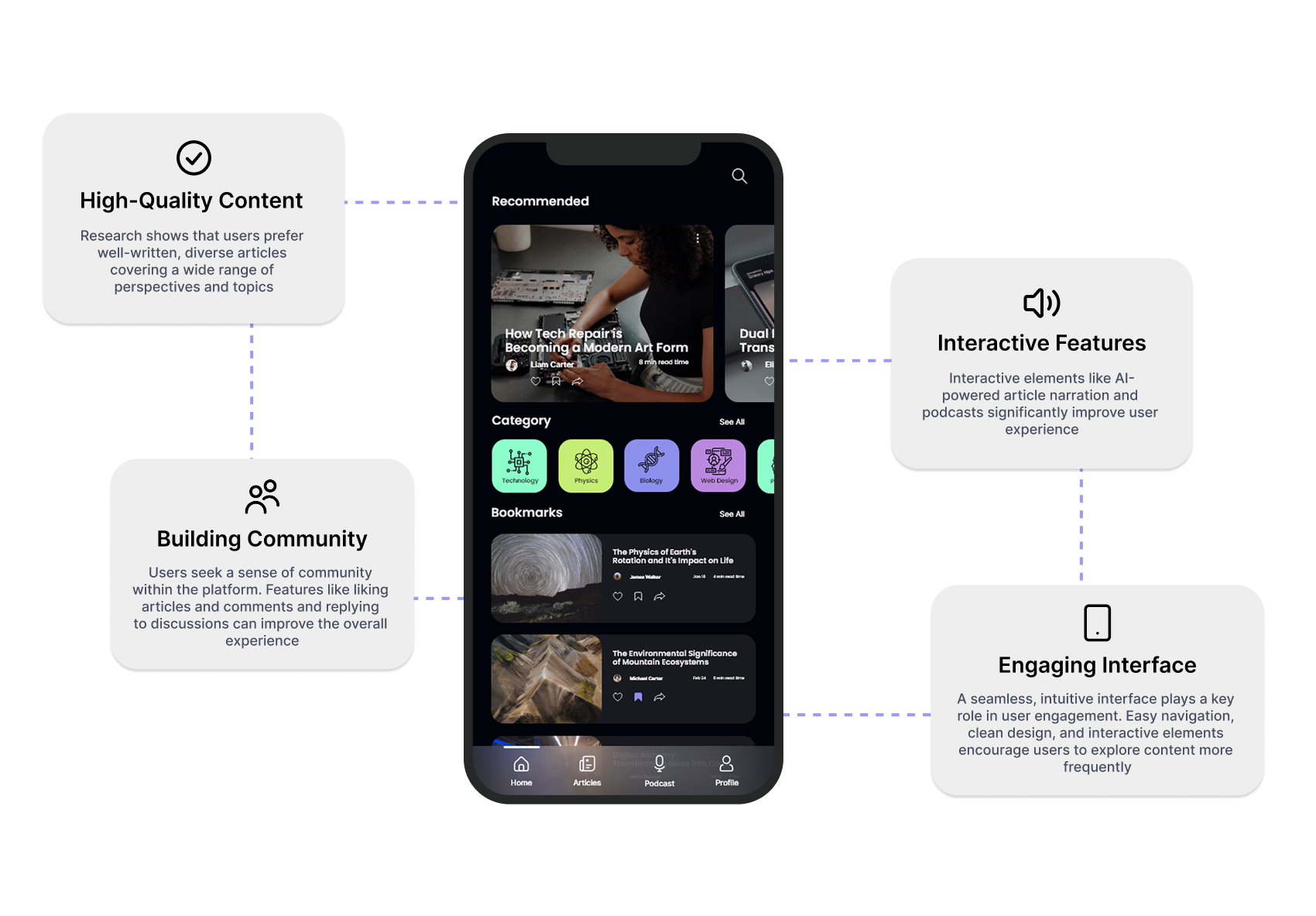
Despite the abundance of scientific content online, many users struggle to find and understand relevant information due to complex language and poor content structure. Research shows that users read only 20–30% of on-screen text, and more than half of mobile sessions last under 15 seconds, making it difficult to engage with dense articles. This lack of clarity and focus limits users' ability to stay informed and explore science meaningfully — a gap ScienceSphere aims to solve through clear organization and mobile-first design.
RESEARCH GOALS
(1)
USER-FRIENDLY DESIGN
Develop a platform with an intuitive and easy-to-navigate design that enhances the user experience.
(2)
INTERACTIVITY AND ENGAGEMENT
Evaluate the platform's ability to increase user engagement and promote exploration of diverse scientific topics.
(3)
USER EXPERIENCE AND PERSONALIZATION
Create personalized content feeds based on user behavior to improve relevance and retention.
(4)
CLEAR AND HIGH-QUALITY CONTENT
Provide well-written scientific content in a clear, easy-to-read format that makes complex topics accessible to a broad audience.
(5)
COMMUNITY BUILDING
Foster a vibrant community of science enthusiasts through comments and meaningful discussions.
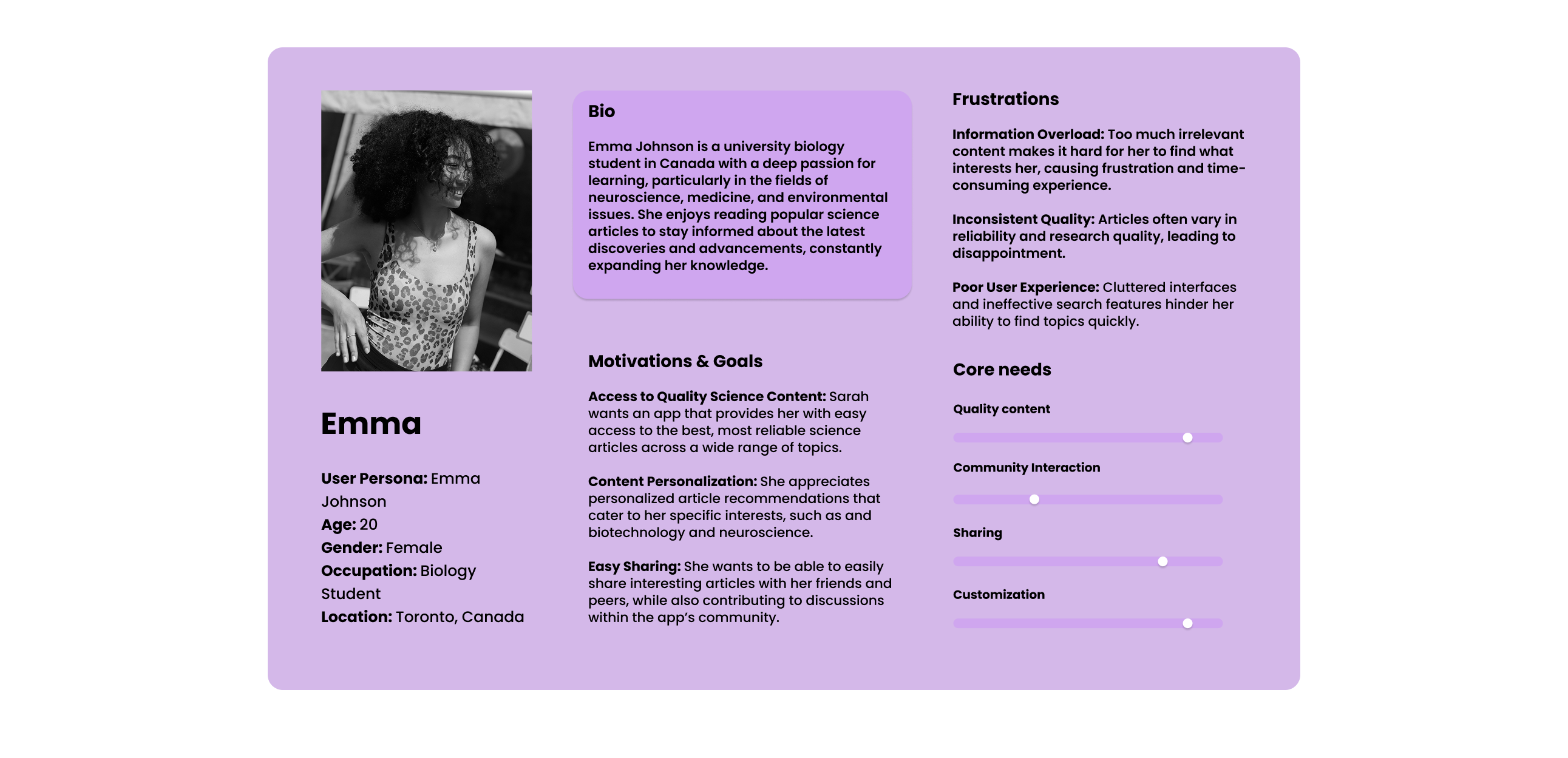
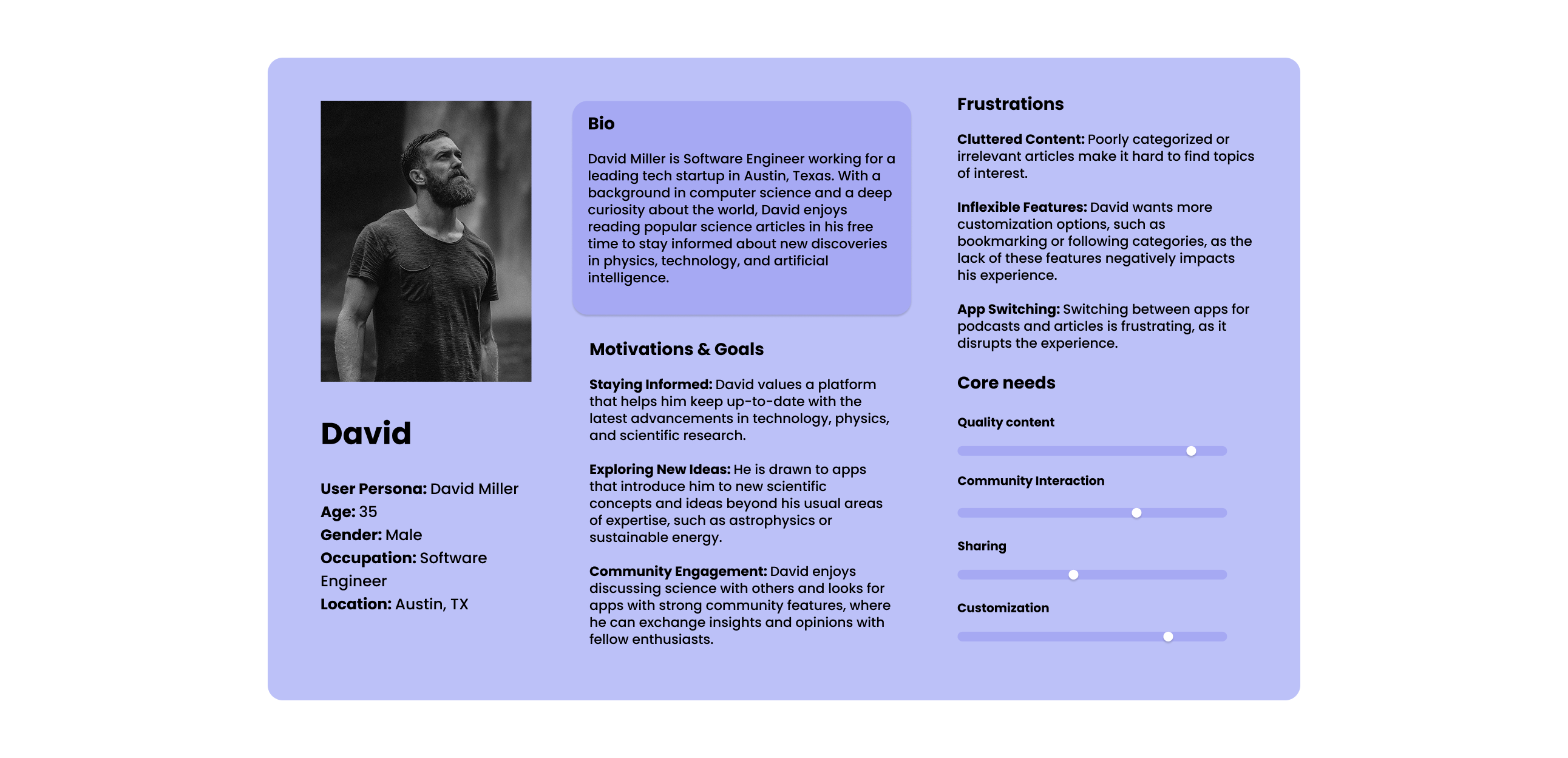
USER PERSONAS
The main user groups represented by personas:
USER FLOW
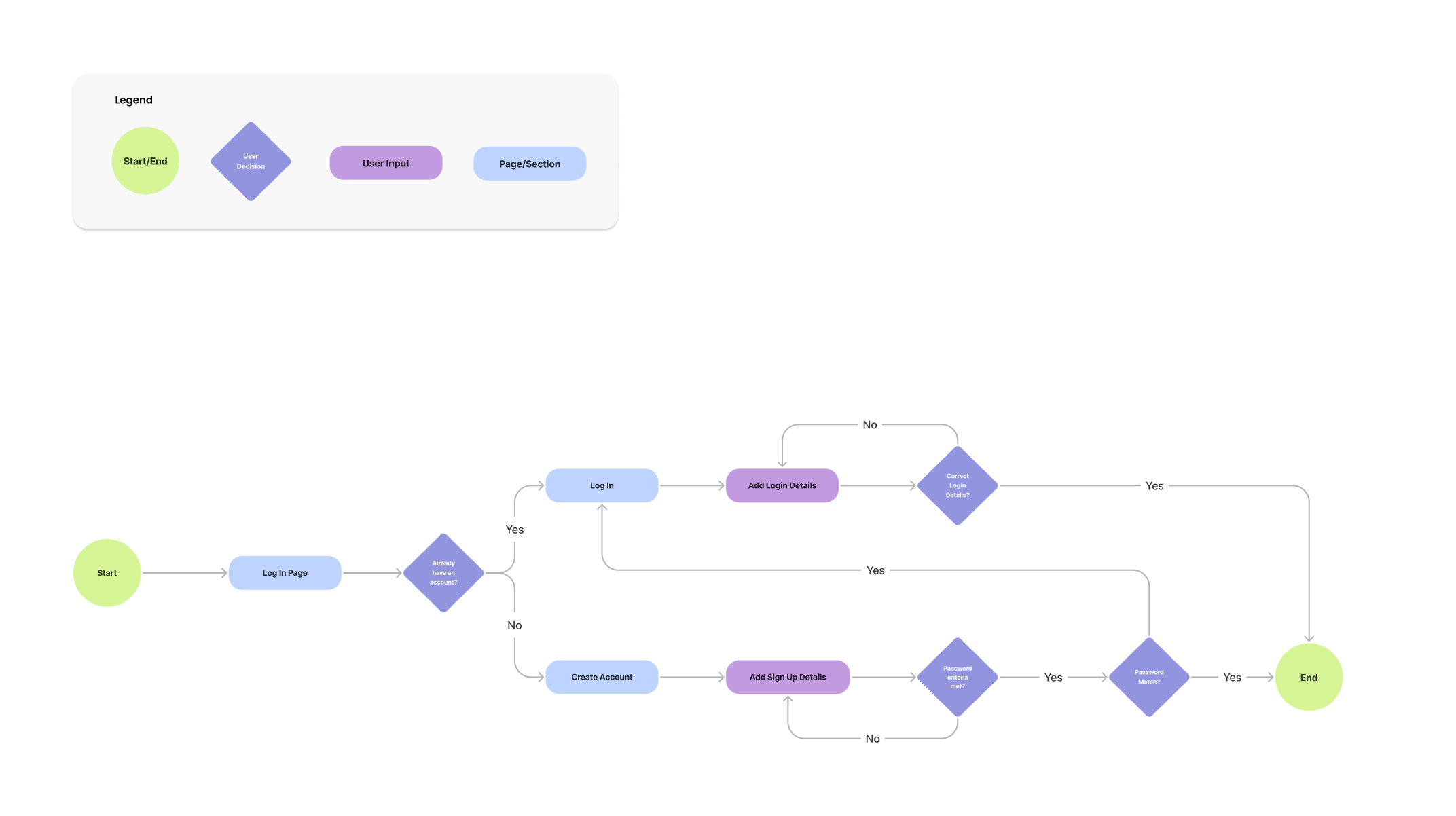
FROM ENTRY TO EXPLORATION
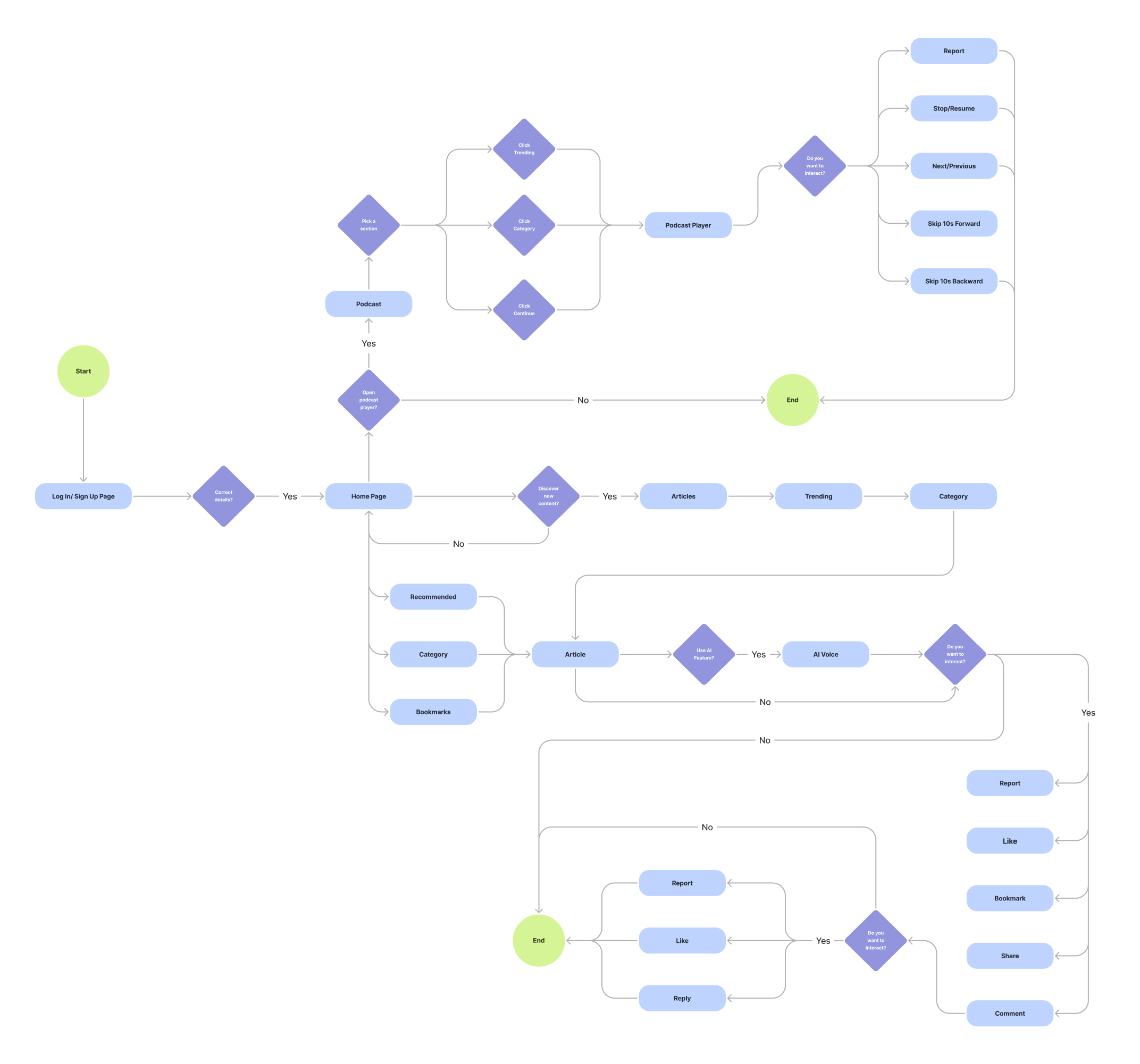
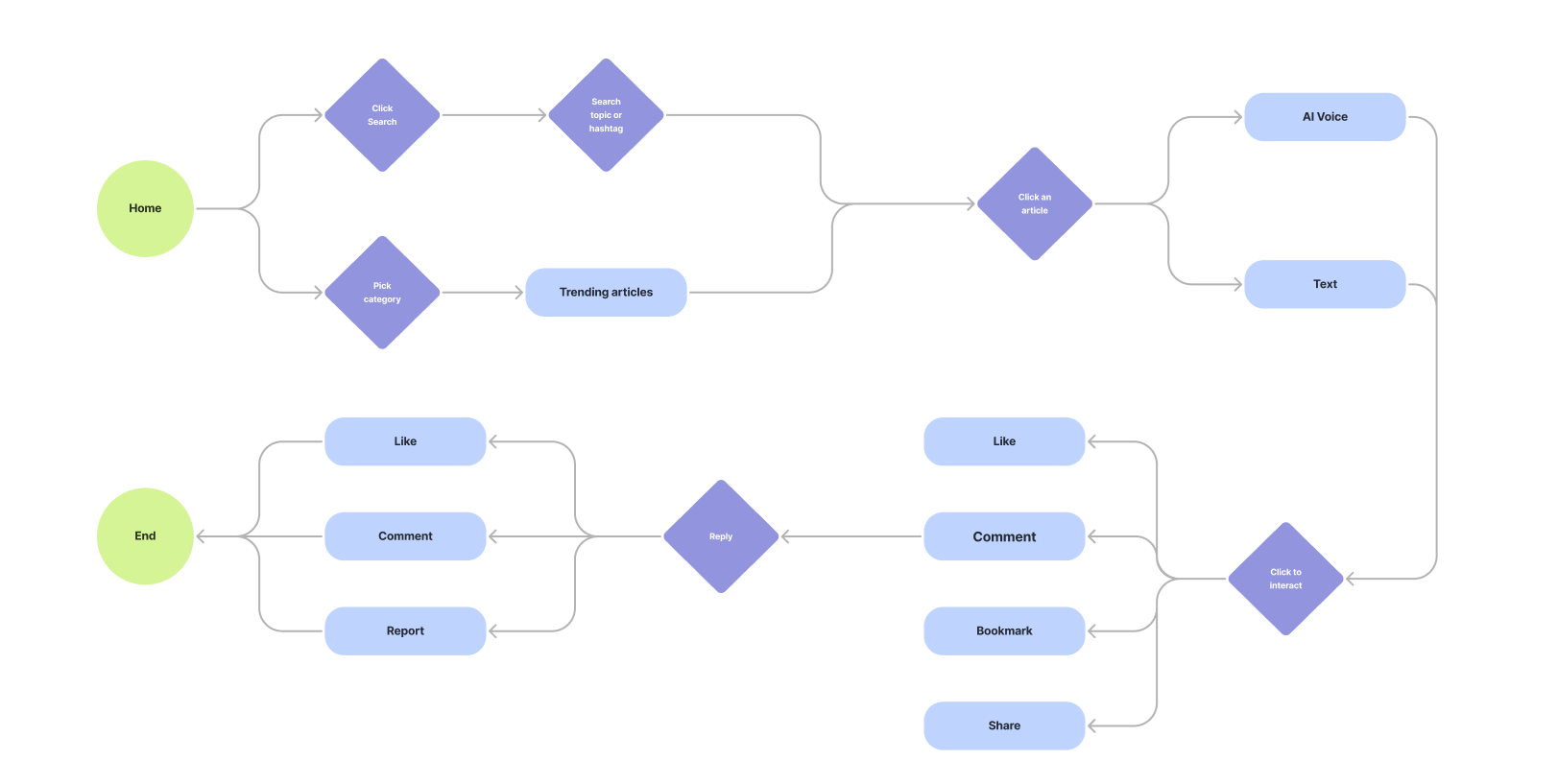
ScienceSphere's user flow was designed to make exploring science feel natural and effortless. Users begin with a personalized home feed, and can easily browse categories, search for topics, or dive into individual articles — all within a few taps.
TASK FLOW
I have identified my two task user flows: - Reading articles through Home - Reading articles through Discover
EXPLORING NEW CONTENT THROUGH "HOME"
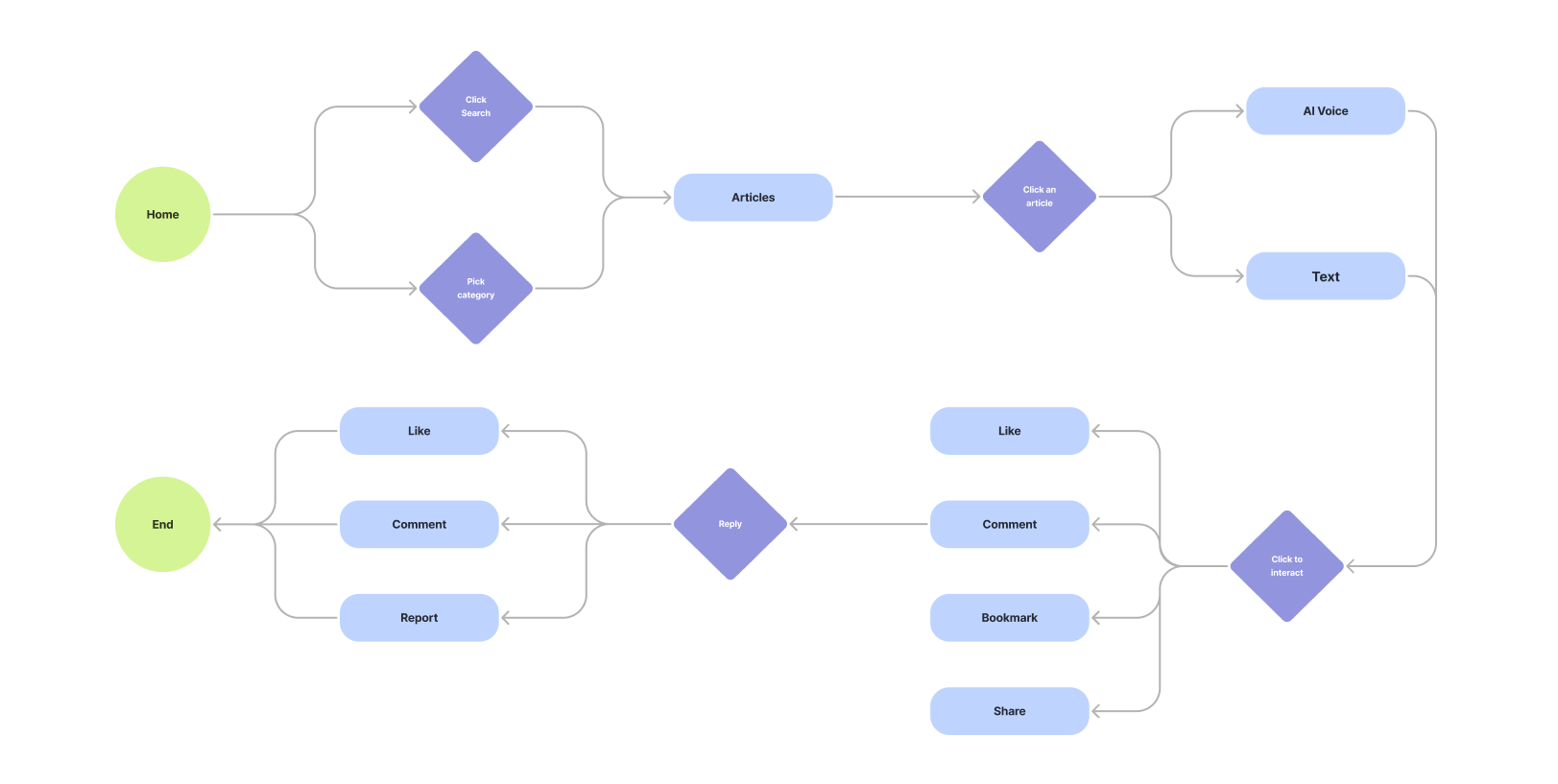
EXPLORING NEW CONTENT THROUGH "ARTICLES"
INFORMATION ARCHITECTURE
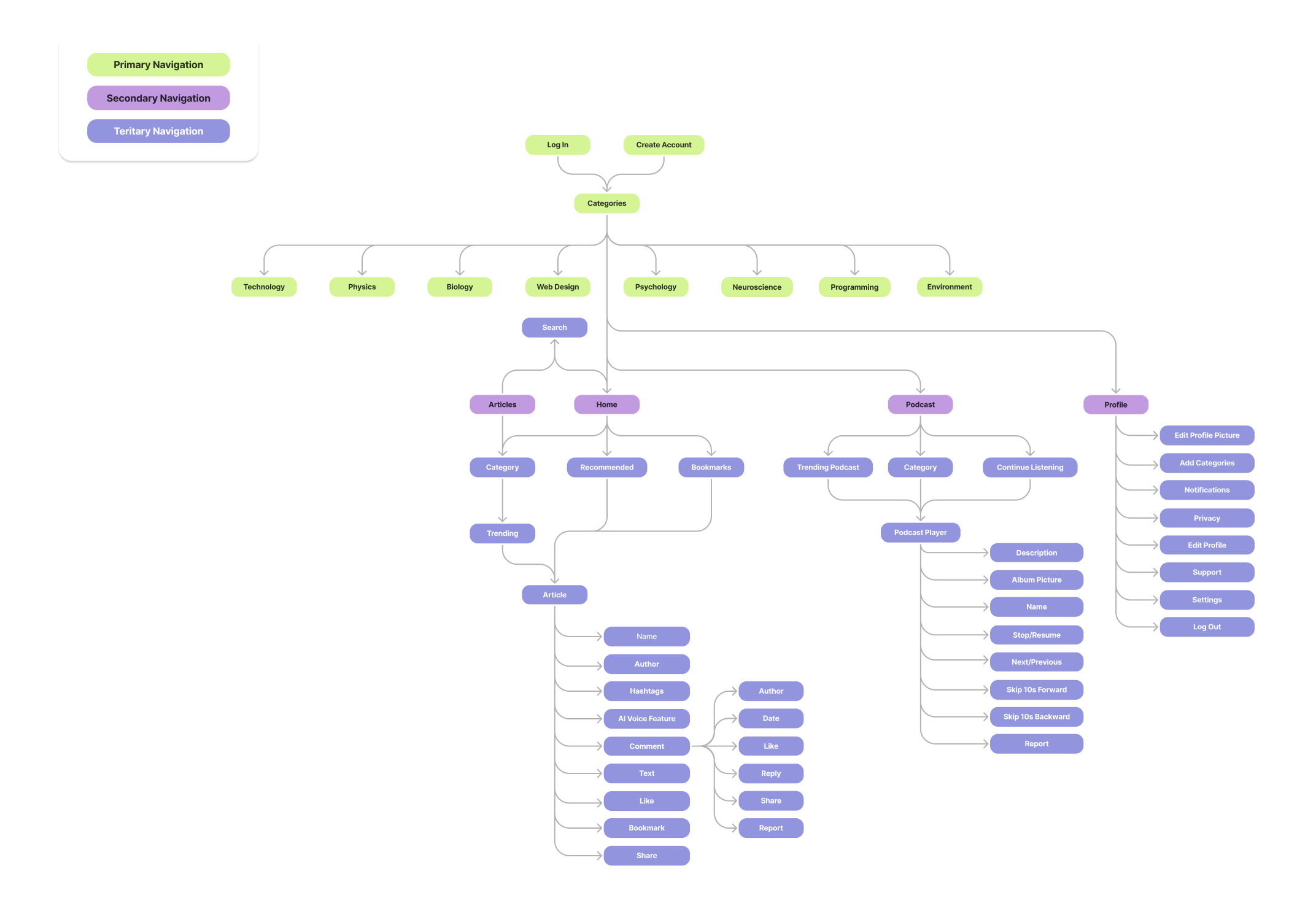
STRUCTURING THE EXPERIENCE
The information architecture organizes content into clear, intuitive pathways. Categories, search, and personalized recommendations guide users through the app, while features like bookmarks and reading history help them easily return to saved content.
WIREFRAMES
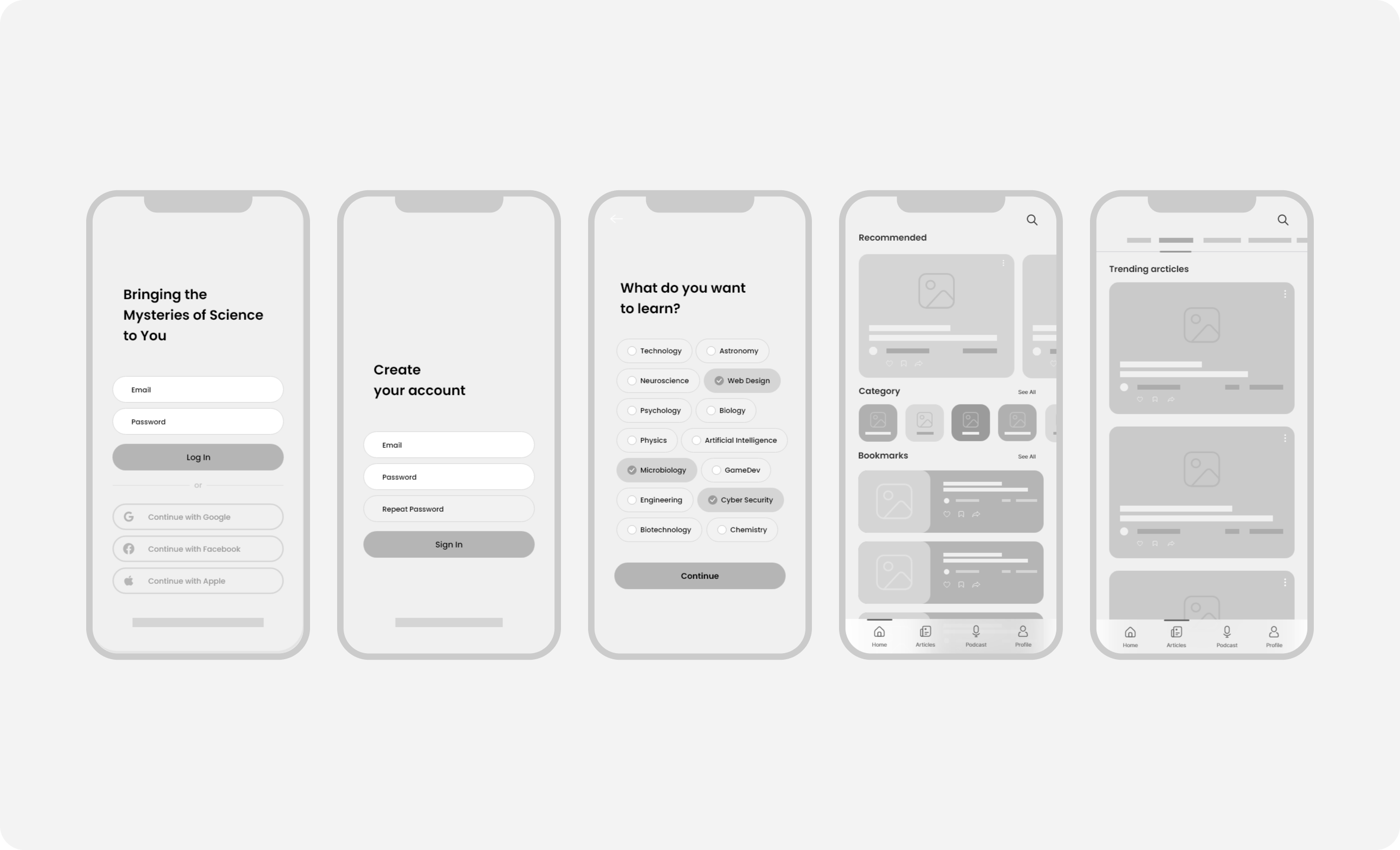
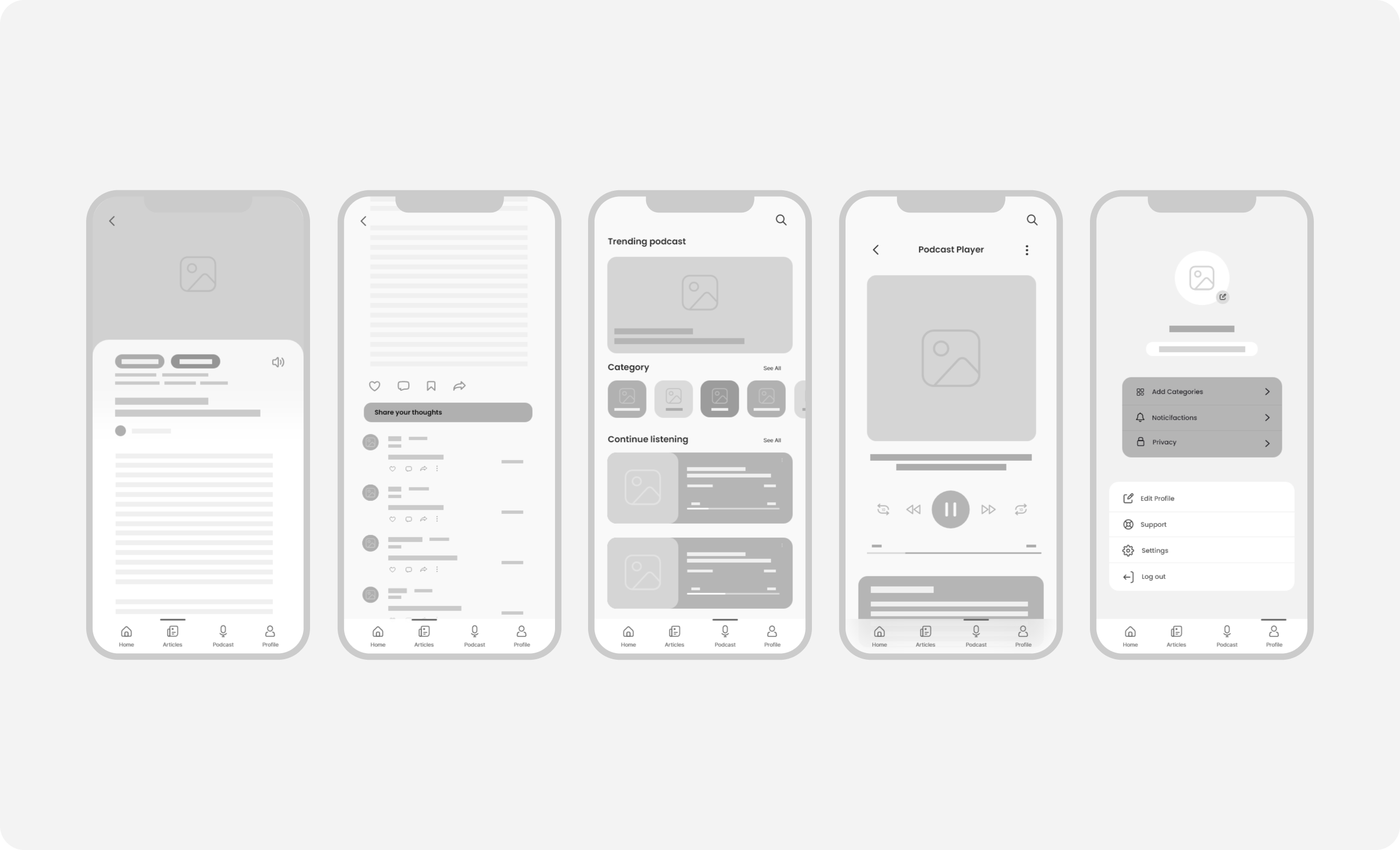
LAYING THE FOUNDATION
Low-fidelity wireframes helped establish the core layout and navigation structure before moving into high-fidelity design. This phase focused on content hierarchy, screen flow, and ensuring a seamless reading experience.
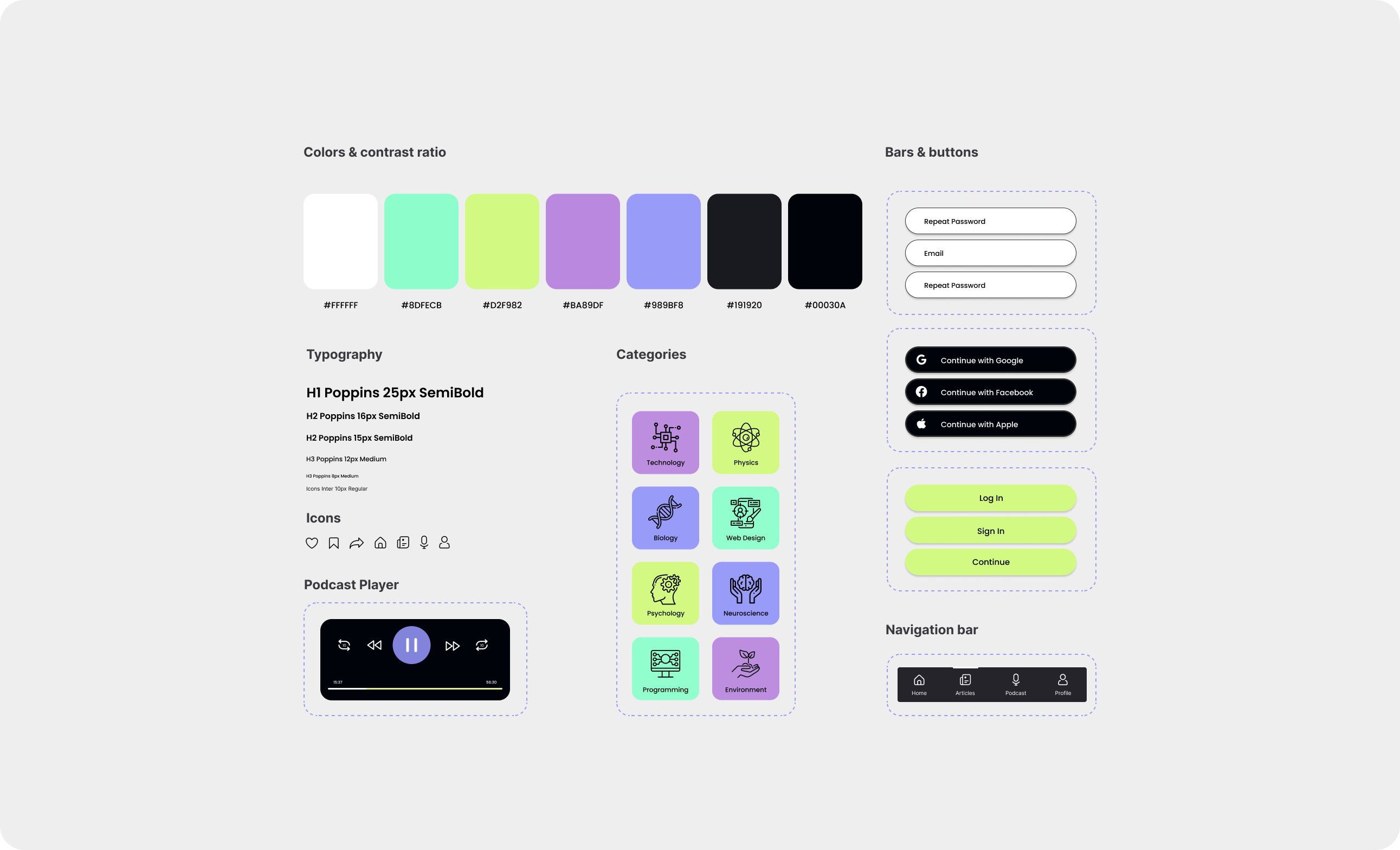
UI COMPONENTS & BRAND IDENTITY
BUILDING THE VISUAL LANGUAGE
The UI components and brand identity were crafted to create a cohesive visual experience. A consistent design system ensures that every element — from buttons to cards — feels unified and reinforces the app's scientific yet approachable personality.
FINAL DESIGN
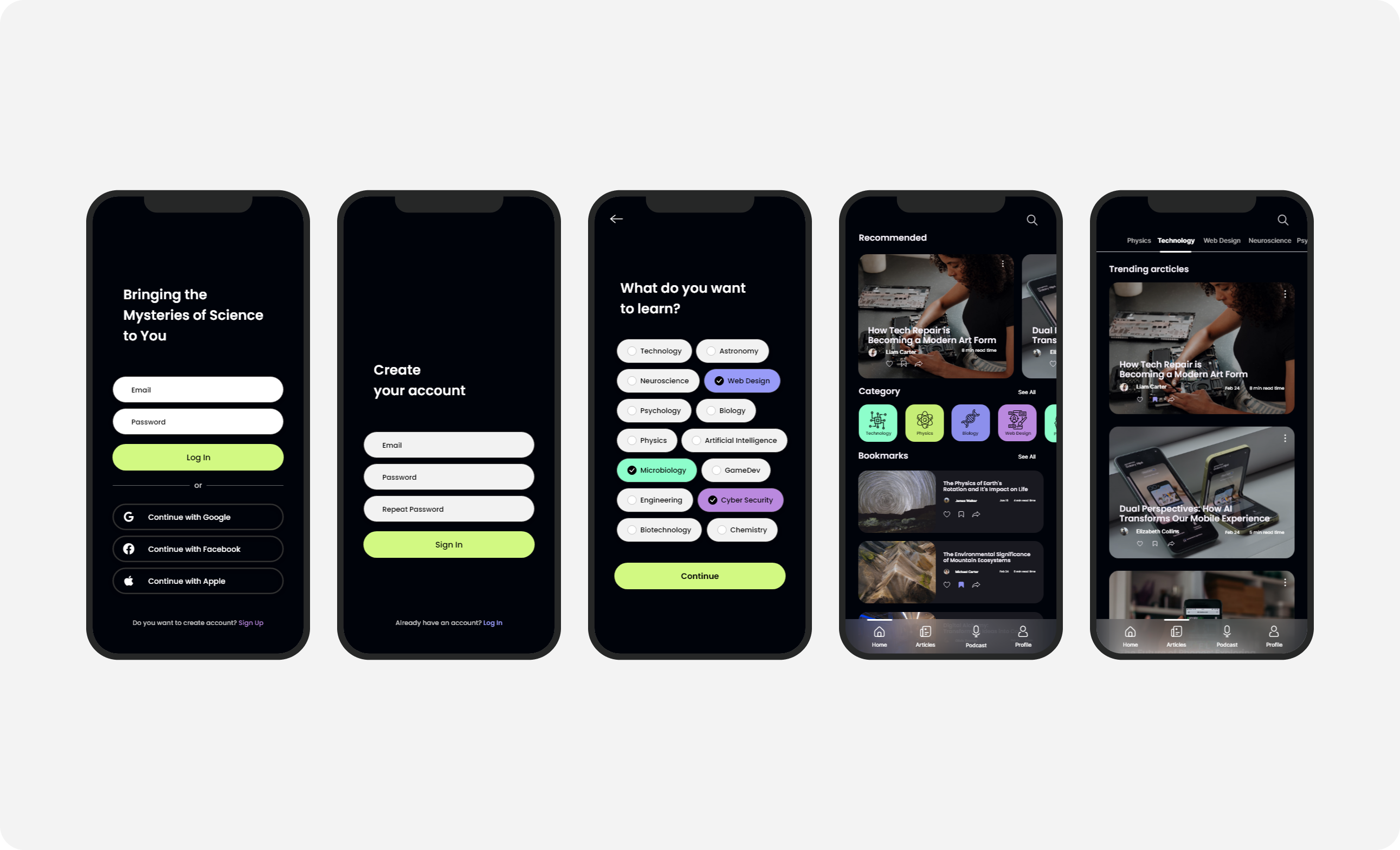
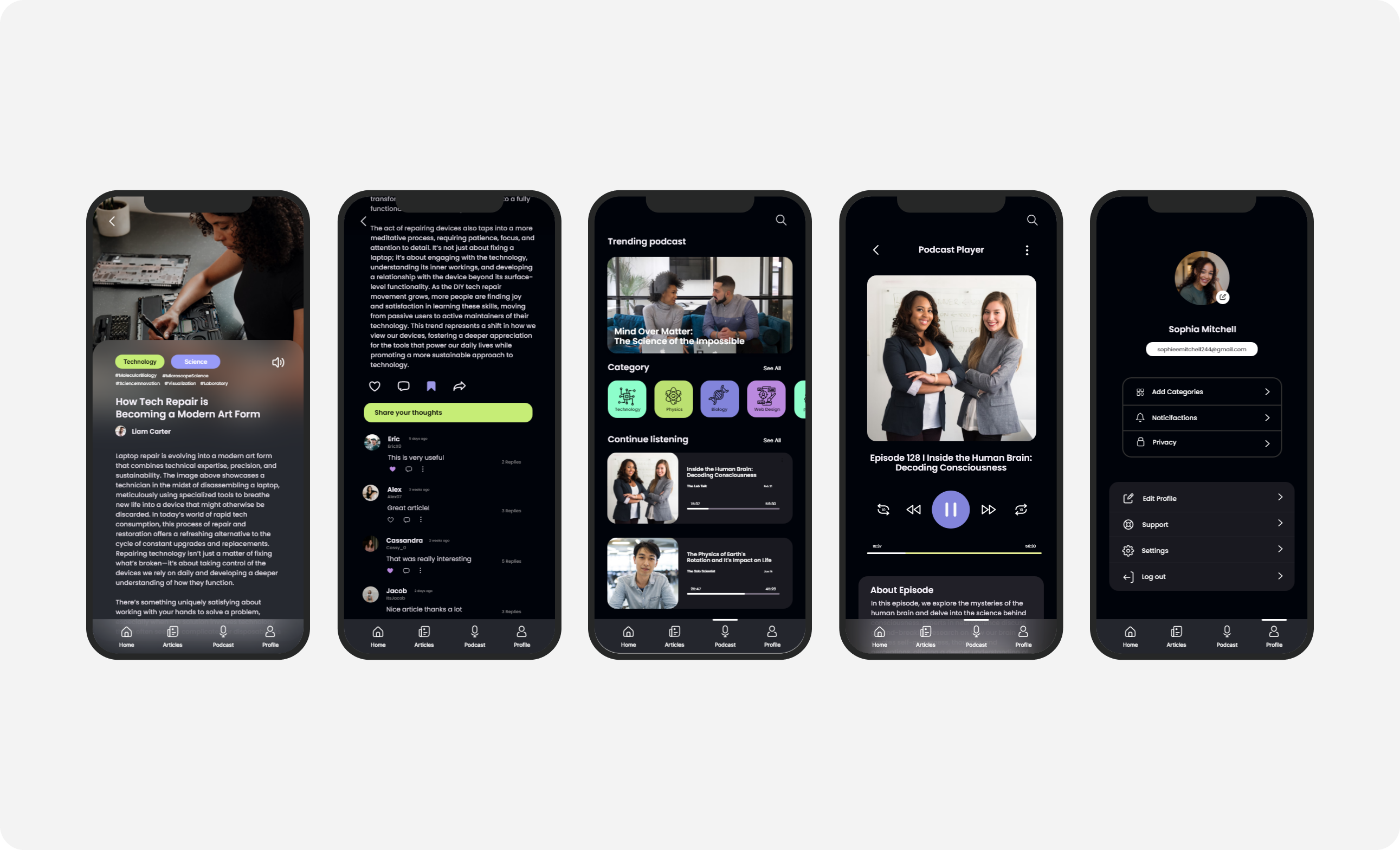
THE POLISHED EXPERIENCE
The final design brings together dark mode aesthetics, clean typography, and thoughtful micro-interactions to create an immersive science reading experience.
PROTOTYPE
INTERACTIVE EXPERIENCE
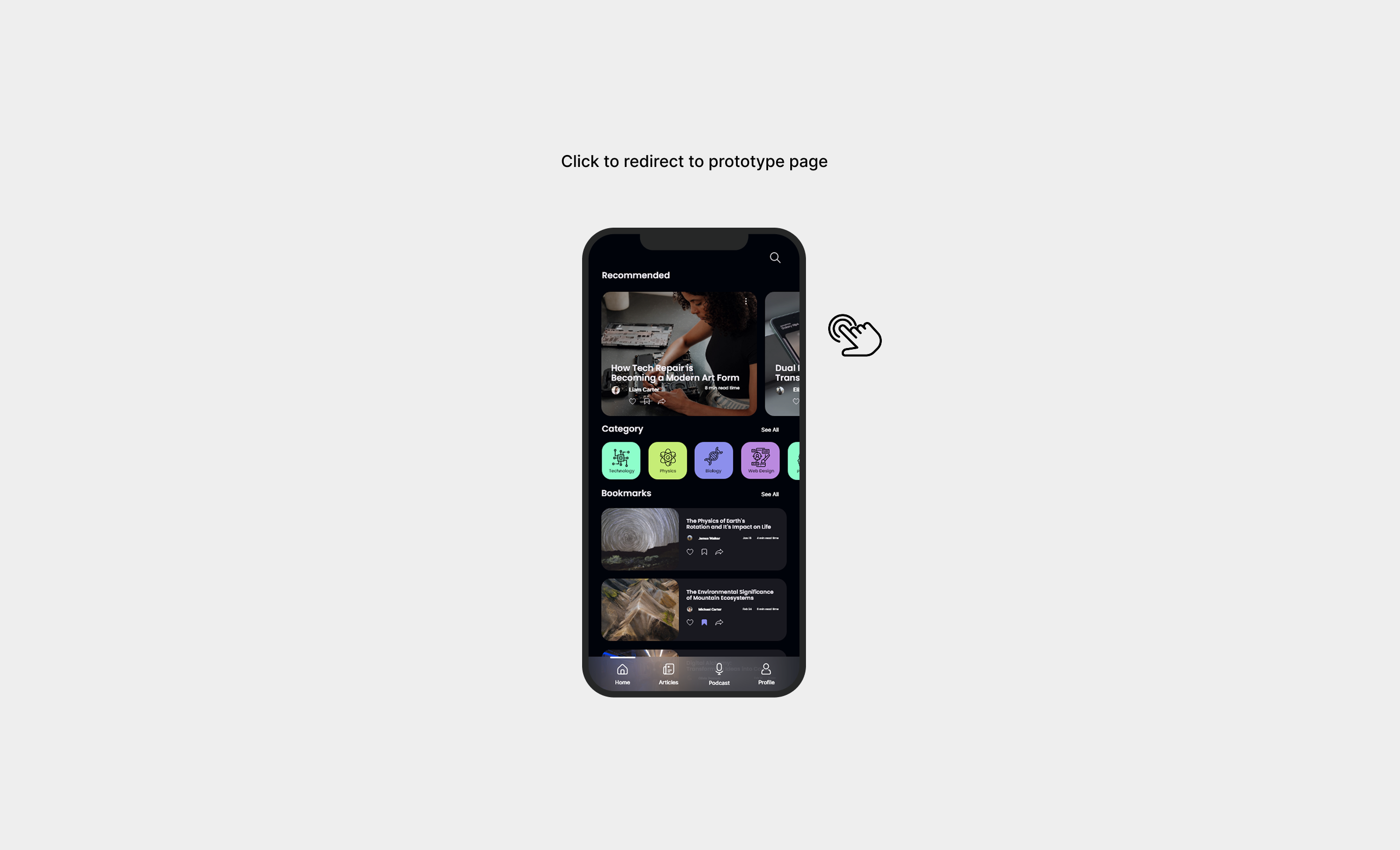
Click to redirect to prototype page